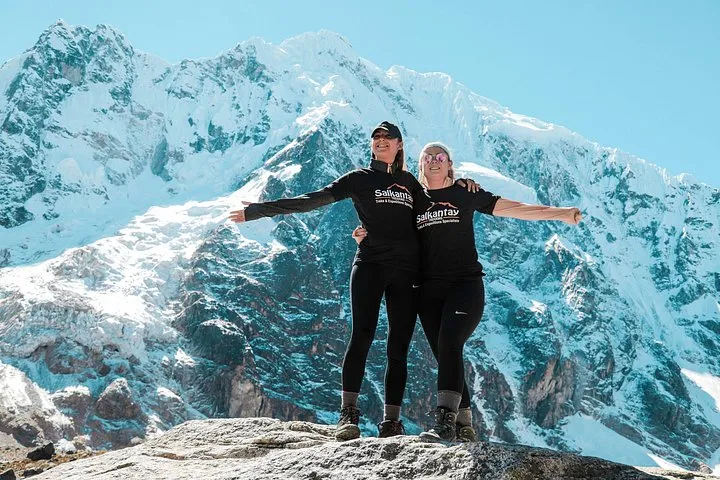
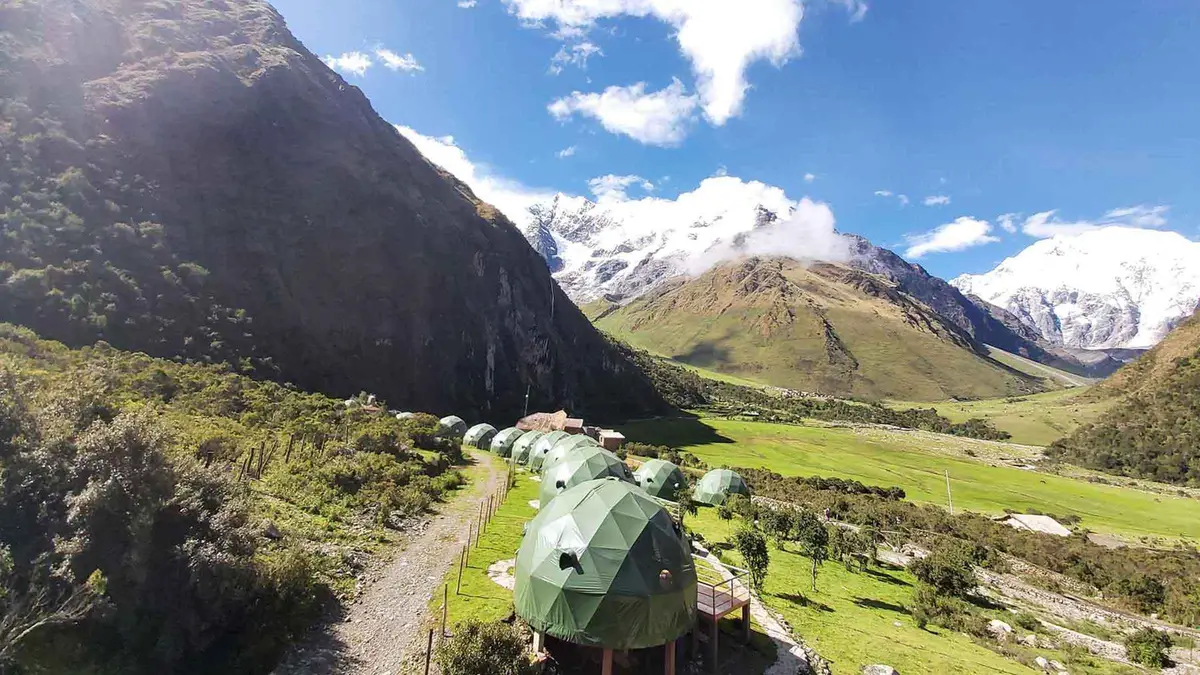
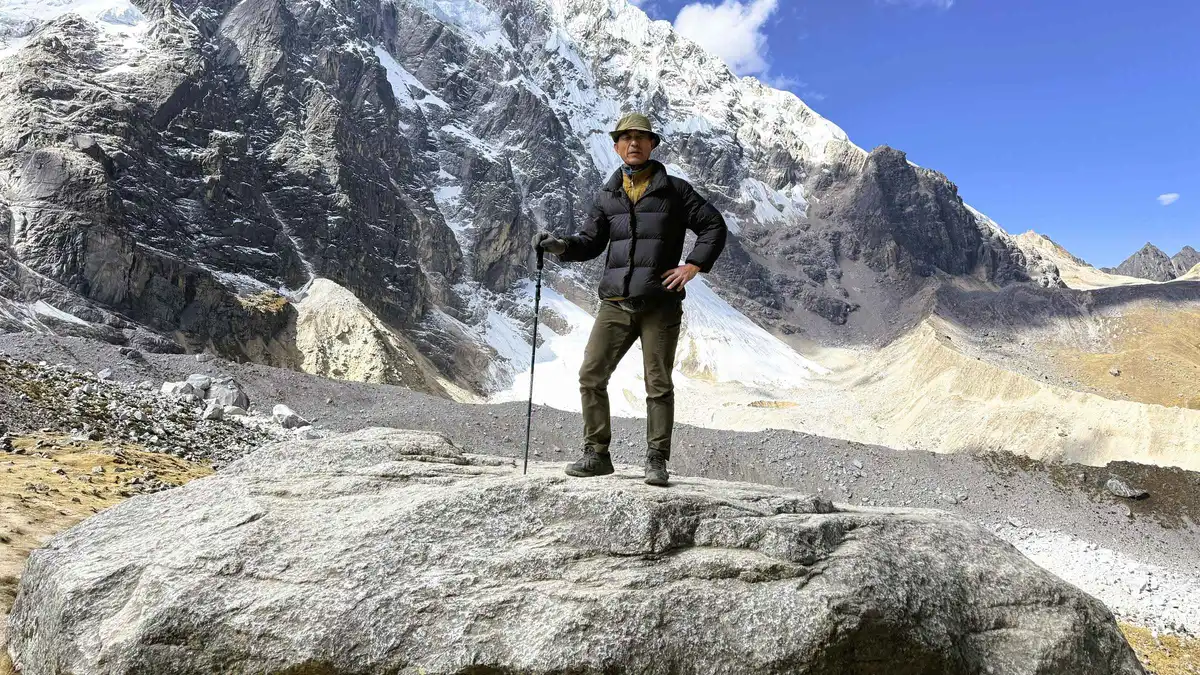
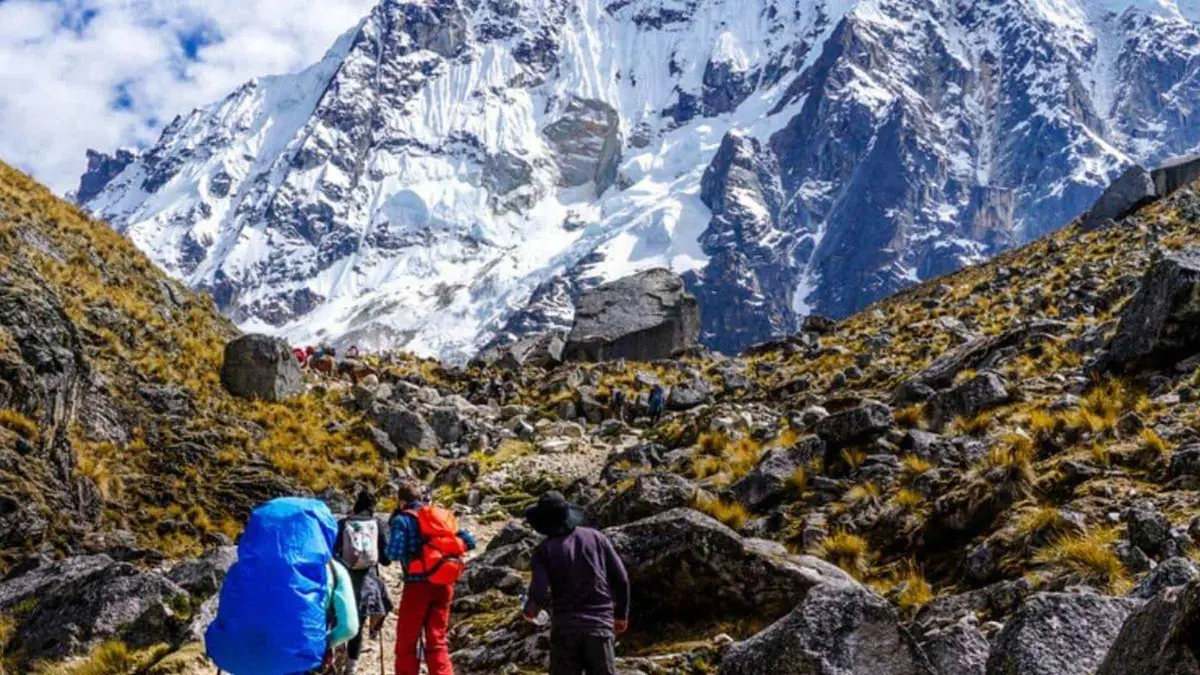
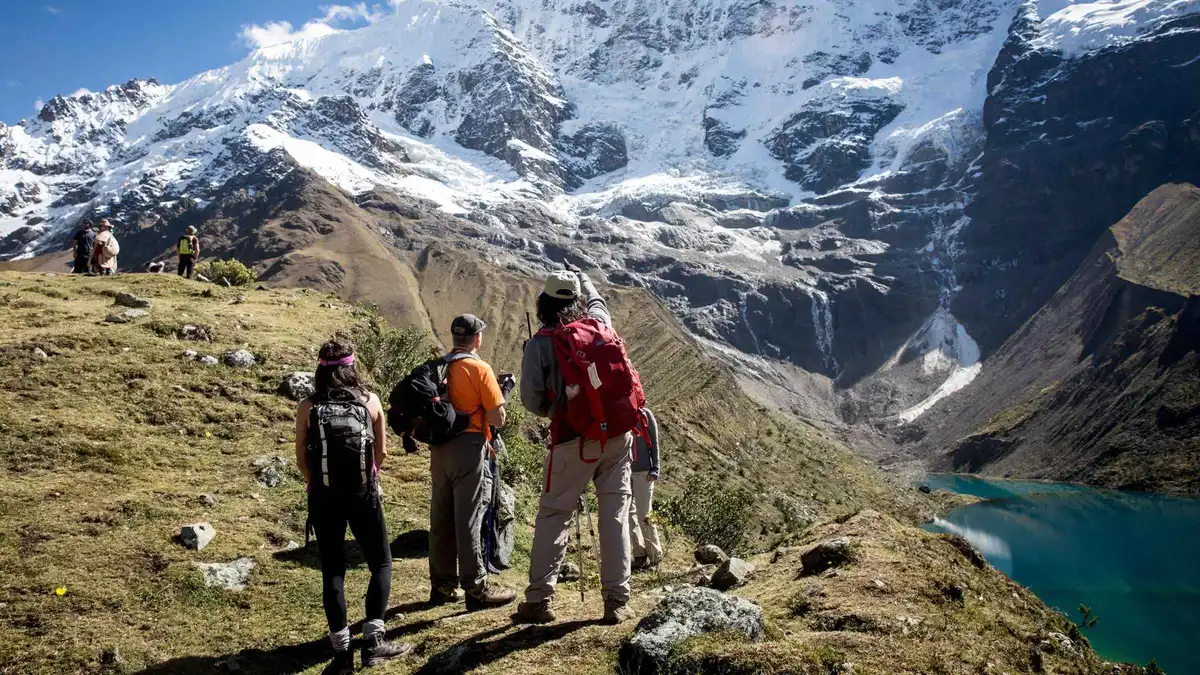
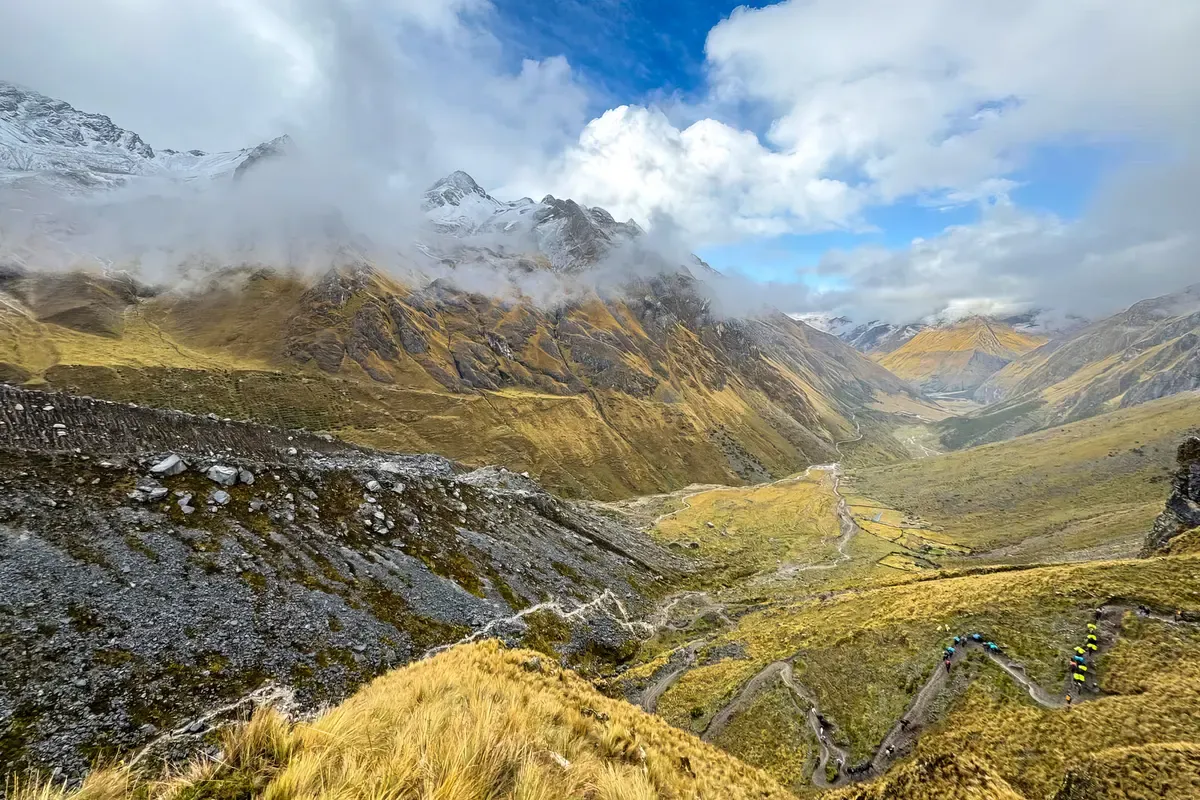
Two trekkers on the stony path below the glaciers of Nevado Salkantay, the route of the Salkantay trek tours from Cusco
Salkantay Trekking Tours
Salkantay trek tours walk around the shoulder of a 6,271 m glacier peak, cross a pass of about 4,600 m and drop into cloud forest before Machu Picchu. The treks sold from Cusco differ in days, in where you sleep, and in two lines of fine print: whether the Machu Picchu ticket and the train back sit inside the price.
Quick answerThe pick, the lowest price and the two lines that set the real cost
The pick is Alpaca Expeditions' 5-day glass cabins trek at $695, rated 5.0 from 2,900 reviews, with the Machu Picchu ticket and the train back included. The lowest listing price is $300, but that trek leaves out the ticket and the way back. The most reviewed trek has 5,267 reviews at $760. Read the inclusions before the price tag.
Key takeaways
The pick: Alpaca Expeditions' 5-day trek, 5.0 from 2,900 reviews, $695 with the Machu Picchu ticket and the train back → see the card
The cheapest listing is $300, but the Machu Picchu ticket and the return from Aguas Calientes are both paid on top → what the price covers
The most reviewed Salkantay departure is the classic 5-day trek, 5.0 from 5,267 reviews at $760 → see the card
No permit is needed for Salkantay, while the Inca Trail caps entries at 500 people a day → Salkantay or the Inca Trail
Salkantay Trek Tours From Cusco
The prices below are the lowest adult rate shown on each listing, so the final checkout price can be higher once extras are added. Every trek here starts with an early pickup in Cusco, and most ask for your passport details to book the Machu Picchu ticket. The listing price may or may not include that ticket and the way back from Aguas Calientes, so check the price comparison and the inclusions section before you book. The booking platform handles the payment, and cancellation terms differ by listing: some are non-refundable, others give a full refund up to 24 hours or several days before departure.
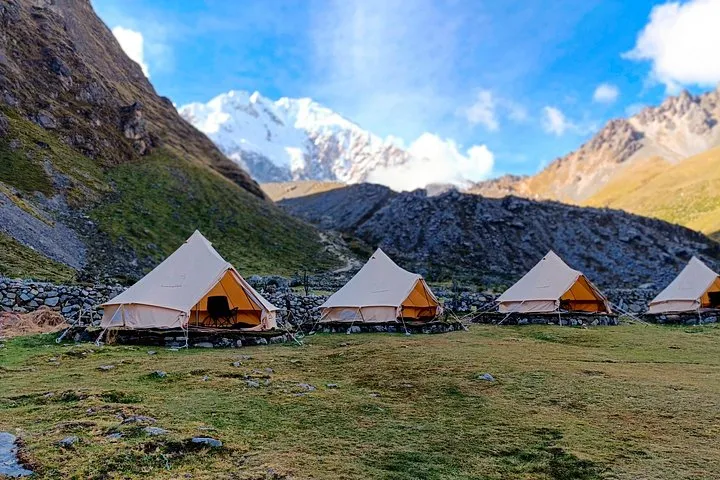
Two nights in glass-topped Sky Lodge domes with private bathrooms and hot showers, then a hotel night in Aguas Calientes. The Machu Picchu ticket and the way back to Cusco are paid on top.
A 5-day dome-camping route with a 2-star hotel night before Machu Picchu and the guided visit included. The Machu Picchu ticket, the sleeping bag and the return trip are paid on top.
A 5-day Salkantay route with Star Domes, jungle cabins and a Machu Picchu ticket and guided visit in the price. Humantay entry, the Machu Picchu bus and a train segment are extra.
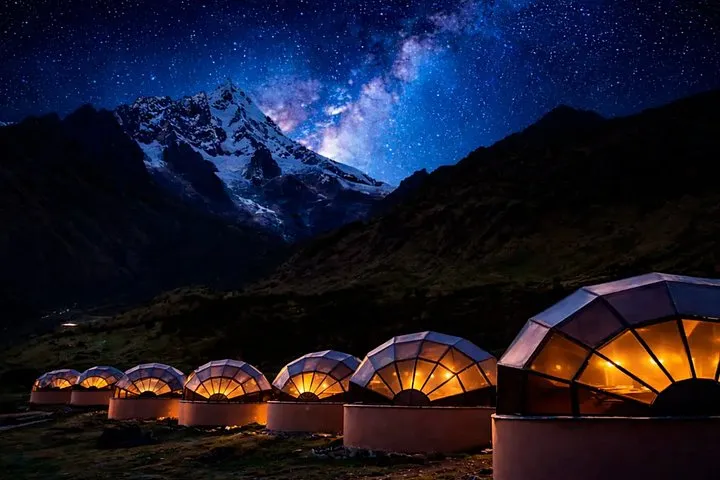
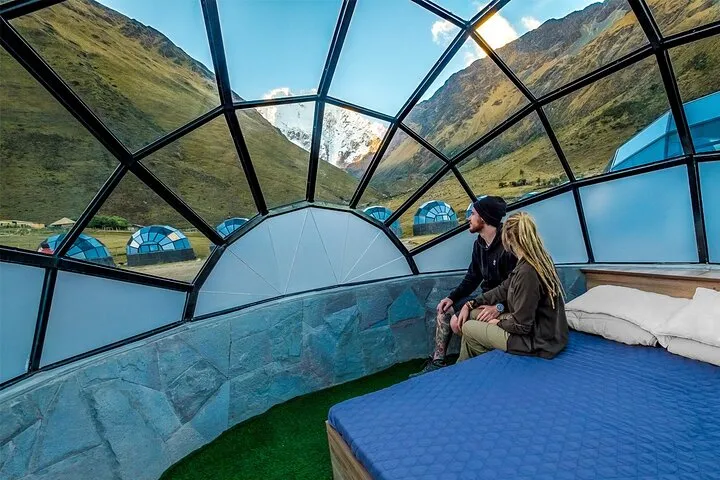
A comfort-led 5-day route with glass cabins, glass domes, a hobbit house and a 4-star hotel night. Entry fees, the Machu Picchu bus and the train back are included.
A shorter 4-day Salkantay trek with a night at Sky Camp, Humantay Lake and the Machu Picchu ticket included. The group is capped at 12 and you ride the train to Ollantaytambo.
A 5-day Salkantay trek with Machu Picchu tickets, Humantay entry, the hot springs, a sleeping bag and trekking sticks all included. Free cancellation up to 24 hours before.
A 5-day route with glamping and a Llactapata camp, a Pachamanca class and a coffee experience. Machu Picchu entry, the bus and a Vistadome train back are included.
A private 4-day Salkantay trek with a hotel night in Aguas Calientes, a guided Machu Picchu visit and the Vistadome train home. This is the most expensive listing and it is non-refundable.
A 4-day route for small groups of up to 8 that camps at private, quieter sites and climbs to the Llactapata ruins. The listing states only meals as included, so confirm tickets and transport.
A two-day taste of the route with Humantay Lake, the Salkantay Pass and a night at the Sky Camp. Sleeping bag and trekking poles are included and the trip does not go to Machu Picchu.
Machu Picchu tickets sell out, so listings ask you to book 3 to 5 months ahead
Free cancellation up to 24 hours on several listings
Group sizes from private to 16 trekkers per departure
Inclusions vary more than prices: the ticket and the train decide the real cost
Salkantay Treks Side by Side
The Salkantay treks in the catalog, with the listing price, the length and the two lines that decide the real cost: whether the Machu Picchu ticket is in the price and how you get back to Cusco. Figures come from each listing.
Two listings, the $300 trek and the $680 domes trek, leave out both the Machu Picchu ticket and the return, so their headline price is not the trip price. The treks that include both the ticket and the way back start at $500. Figures current in Q4 2026.
Check Dates for the Glass Cabins Trek
Machu Picchu tickets are released in limited numbers per day, and the listings say to book at least five months ahead for the classic route and three months ahead for others. If your dates are close, check live availability before the tickets for that day are gone.
Salkantay Trek 5D/4N with Glass Cabins, Sky Domes and Hobbit House
From $695 per person · 5 days · 5.0★ (2,900 reviews)
You'll confirm the exact date and time on the secure booking page.
What a Salkantay Trek Price Covers
Two lines of a Salkantay listing decide the real cost of the trip: the Machu Picchu entrance ticket, and the way back from Aguas Calientes to Cusco. On the cheapest departures, both are missing from the headline price and paid later.
The Extras Listed on Top
Some listings quote a low price and name the missing pieces as extra costs in their own fine print. The figures below come straight from each listing, not from the ticket offices or the train operators, so confirm them at checkout. They matter most on the treks where the ticket and the return are left out.
On the $680 domes trek, the operator asks for the Machu Picchu entrance, the return train or bus, and the trail entrance fee on top of the listing price. On the $462 trek, the Humantay admission, the first-day breakfast, the Consettur bus and one train segment are named as extra.
Extra
Cost
Where it applies
Machu Picchu entrance (or 152 soles in Aguas Calientes)
USD 48
Sky Lodge domes trek
Return train Aguas Calientes to Ollantaytambo
USD 95
Sky Lodge domes trek
Bus Hidroelectrica to Cusco
USD 30
Sky Lodge domes trek
Train Hidroelectrica to Aguas Calientes
US$39
Star Domes 5-day trek
Humantay or Salkantay entrance
S/ 20
Star Domes 5-day trek and Sky Lodge domes trek
Cocalmayo hot springs ticket
USD 15
Salkantay 5-Day Hiking Trek
Solo room supplement
USD 50
Salkantay Glass Cabins Trek
Sleeping bag rental
S/ 40
Star Domes 5-day trek
Treks With the Ticket and the Train Back Included
Seven of the departures carry both the Machu Picchu ticket and the return leg inside the listing price. The classic 5-day trek at $760 includes the ticket, the bus up to the site and a panoramic Expedition or Voyager train back, with groups capped at 10. The glass cabins trek at $695 covers all entry fees, the round-trip Machu Picchu bus, the Expeditions train back and a personal porter of 7 kg, and ends with a 4-star hotel night in Aguas Calientes.
The Vistadome 5-day trek at $698 includes the ticket, the bus and a Vistadome or 360 degree train. The 5-Day Hiking Trek at $500 and the 5-Day Trek with Gear at $650 both include the ticket and the train to Ollantaytambo, and the gear version adds the sleeping bag, trekking sticks and Humantay entry. The Sky Camp 4-Day at $720 includes the ticket and the tourist class train back, though the bus from Machu Picchu down to Aguas Calientes is paid on site.
The private 4-day trek at $1,265 includes the bus both ways, the Hydroelectric train leg and a Vistadome train with a private transfer to Cusco, with the Machu Picchu ticket subject to availability.
Treks That Leave Them Out
The Salkantay Panoramic Domes Trek is the lowest price on this page at $300, and it reads well until you see its exclusions: the Machu Picchu ticket, the sleeping bag and the return train or bus are all paid separately. The guided visit to the site is included, the entry itself is not, so the cheapest listing is not the cheapest trip once the ticket and the ride home are added. The Sky Lodge Domes Trek at $680 asks for the Machu Picchu entrance, the return train to Ollantaytambo or the bus from Hidroelectrica, and the Salkantay and Humantay trail fee of 20 soles on top.
Its domes have private bathrooms and hot showers, which is the appeal, but budget for the extras before comparing it with the inclusive departures. The Star Domes 5-day trek sits between the two: its Machu Picchu ticket is included subject to availability, but the Humantay admission, the Consettur bus and a train segment are extra and the listing is non-refundable.
Cancellation Terms
Cancellation terms split three ways, and they matter more than a few dollars of price difference. The classic 5-day trek, the panoramic domes, the Star Domes trek, the glass cabins trek, the Sky Camp 4-Day, the Vistadome trek and the private 4-day trek are all non-refundable, with all sales final. The Sky Lodge Domes Trek, the 5-Day Hiking Trek and the 5-Day Trek with Gear give free cancellation up to 24 hours before departure for a full refund.
The small group 4-day trek and the Humantay Lake 2-Day Trek refund in full 6 or more days before departure, 50% between 2 and 6 days before, and nothing inside 2 days. If your flights could still move, the 24-hour listings are the safer booking.
Cancellation
Listings
Refund
Non-refundable
Classic 5 days, panoramic domes, Star Domes, glass cabins, Sky Camp 4 days, Vistadome 5 days, private 4 days
No refund
Free cancellation 24h
Sky Lodge domes, 5-Day Hiking Trek, 5-Day Trek with Gear
Full refund 24 hours before
6-day terms
Small group 4-day, Humantay Lake 2-day
Full refund 6+ days, 50% at 2-6 days
The Salkantay Route Day by Day
The Salkantay Trek runs from Mollepata near Cusco down to Aguas Calientes, the town below Machu Picchu. Every operator arranges the stages a little differently, so use this as a map, not a fixed schedule. Every stop with its altitude is on the Salkantay trek map, and the first-day detour has its own page: Humantay Lake.
Trekkers on the switchbacks below the Salkantay Pass, with the glacier peaks in cloud. Photo: Steve FUNG, CC BY-SA 4.0, via Wikimedia Commons
The Stages on a Classic 5-Day Trek
The stage figures below come from Wikivoyage's Salkantay Trek page. Operators' routes vary in campsite, start point and daily order, so treat these as the classic skeleton rather than any single itinerary.
Stage
Distance
Climb
Sleeps at
Mollepata to Soraypampa
20 km
about 1,000 m
Soraypampa
Humantay Lake detour from Soraypampa
about 4 km
300 m
Soraypampa
Soraypampa to Collapampa over the Abra Salkantay
20 km
about 700 m
Collapampa
Collapampa to La Playa
12 km
Not listed
La Playa
La Playa to Hidroeléctrica
12 km
Not listed
Hidroeléctrica
Hidroeléctrica to Aguas Calientes
10 km
Not listed
Aguas Calientes
Soraypampa and Humantay Lake
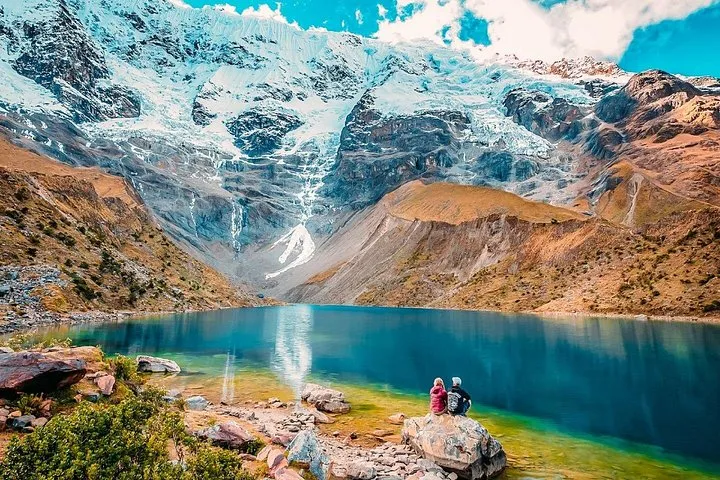
Most departures sleep the first night at Soraypampa, the base camp under Salkantay. Sources put the village between 3,880 and 3,920 m, so you sleep close to 3,900 m on night one. From there the detour to Humantay Lake is about 4 km with 300 m of climbing, and the lake sits at 4,200 m below a glacier of the same name.
The entrance fee is disputed: one source lists 30 soles for foreigners and 20 for Peruvians, another lists 20 soles and 10 soles. Guided treks such as the Humantay Lake 2-Day Trek and the Salkantay Sky Lodge Domes Trek include Humantay Lake on day one.
Over the Salkantay Pass
Day two is the hard day. The Abra Salkantay, the highest point of the trek, is reported between 4,580 and 4,660 m depending on the source, with 4,600 and 4,630 m the most common figures. Salkantay mountain itself stands at 6,271 m, with an alternative published figure of 6,264 m, and its name comes from a Quechua word meaning wild or savage, hence the translation Savage Mountain.
Nights in the high camps drop to minus 10 C at the coldest, so a warm sleeping bag matters. Several operators rent bags separately, and the Salkantay 5-Day Trek with Gear includes one in the price.
Into the Cloud Forest
After the pass the trail drops fast into warmer country. Chaullay sits at about 2,900 m and La Playa at about 2,060 m, and the valley is coffee country, with several tours including a farm visit. This is where the Cocalmayo hot springs near Santa Teresa fit in, with four pools reported at 38 to 44 C. The entry fee varies by listing: one tour charges it as a USD 15 extra, other sources list 10 soles for foreigners.
The last stretch follows the rail line from the Hidroeléctrica station, which sits at 1,890 m. The train to Aguas Calientes takes about 30 minutes, the walk along the tracks about 2.5 hours. The train fare is disputed: Wikivoyage lists US$31 for foreigners, another source about 60 soles or US$19.
Machu Picchu stands at 2,430 m above the town. The Consettur bus runs every 10 minutes, and walking up takes 45 to 60 minutes. Once the trek is done you still need the way back, which is where the train fares in the comparison table matter.
How 4-Day Treks Differ
Four-day versions compress or cut the middle. Common patterns are driving a section by vehicle, merging days three and four, or walking to Hidroeléctrica and taking the short train to Aguas Calientes. The Salkantay Sky Camp 4-Day keeps Humantay Lake, the pass and Sky Camp in three nights, and the Salkantay Sky Lodge Domes Trek runs from Challacancha over the pass to a hotel night in Aguas Calientes in four days.
Listing photos show domes under clear skies. These show the pass day, the descent into the forest and the trail in the wet months.
Hiking 40 miles on the Salkantay Trek in Peru
The whole route on foot, from the high camps over the pass and down to Machu Picchu.
Video: Kraig Adams
Hiking the SALKANTAY TREK to Machu Picchu, Peru (Better than the Inca Trail?!)
A guided trek day by day, with the Inca Trail question asked on camera.
Video: Kitti and Jon
The Salkantay Trek in the Rainy Season
What the trail looks like in the rainy season, mud included.
Video: Open Borders Br
Third-party videos, embedded from YouTube. This site did not shoot them and has no relationship with the creators.
Salkantay or the Inca Trail
Both walks end at Machu Picchu, but they are different treks with different rules. The table pulls the hard numbers from the sources in the pack. The full comparison is on Salkantay trek vs Inca Trail.
The Two Treks Side by Side
The figures below come from Wikipedia's Inca Trail and Salcantay pages and from Wikivoyage. The Salkantay length is given as a range because guides measure the route from different start points.
Compare
Salkantay Trek
Classic Inca Trail
Permit
No permit, a S/20 trek fee at the start
Permit required, sold first come first served
Daily cap
No cap in the sources
500 people a day, of which 200 are trekkers and the rest guides and porters
Length
56 to 92 km, sources differ
42 km
Highest point
Abra Salkantay, reported 4,580 to 4,660 m
Warmi Wanusqa (Dead Woman's Pass) at 4,215 m
Days
4 to 5
4 to 5
Closed
No closure in the sources
Closed every February for cleaning
Who Each Trek Suits
Salkantay suits trekkers who want to book late, because there is no permit system and dates do not sell out months ahead the way the Inca Trail's do. The scenery is the draw: a 6,271 m glacier, Humantay Lake at 4,200 m, cloud forest and hot springs, plus camps with character such as the glass domes on the Salkantay Glass Cabins Trek. The Inca Trail suits trekkers who want the archaeology underfoot, with Inca sites along the route, and the classic arrival on foot at the Sun Gate.
It requires a registered guide and a permit.
The Mollepata Link
The two routes meet in the same mountains. The Mollepata route to the Inca Trail is the longest variant of that trail and has its highest pass. On the Salkantay side no permit is needed, so dates can be booked closer to departure, with the Machu Picchu ticket the only part that sells out.
Salkantay crosses one of the higher trekking passes in the Cusco region, so altitude is the main physical risk. Here is what the route asks of you and what the health advice says. More on the pass day and the risks: how hard the Salkantay trek is, and what to wear: the Salkantay trek packing list.
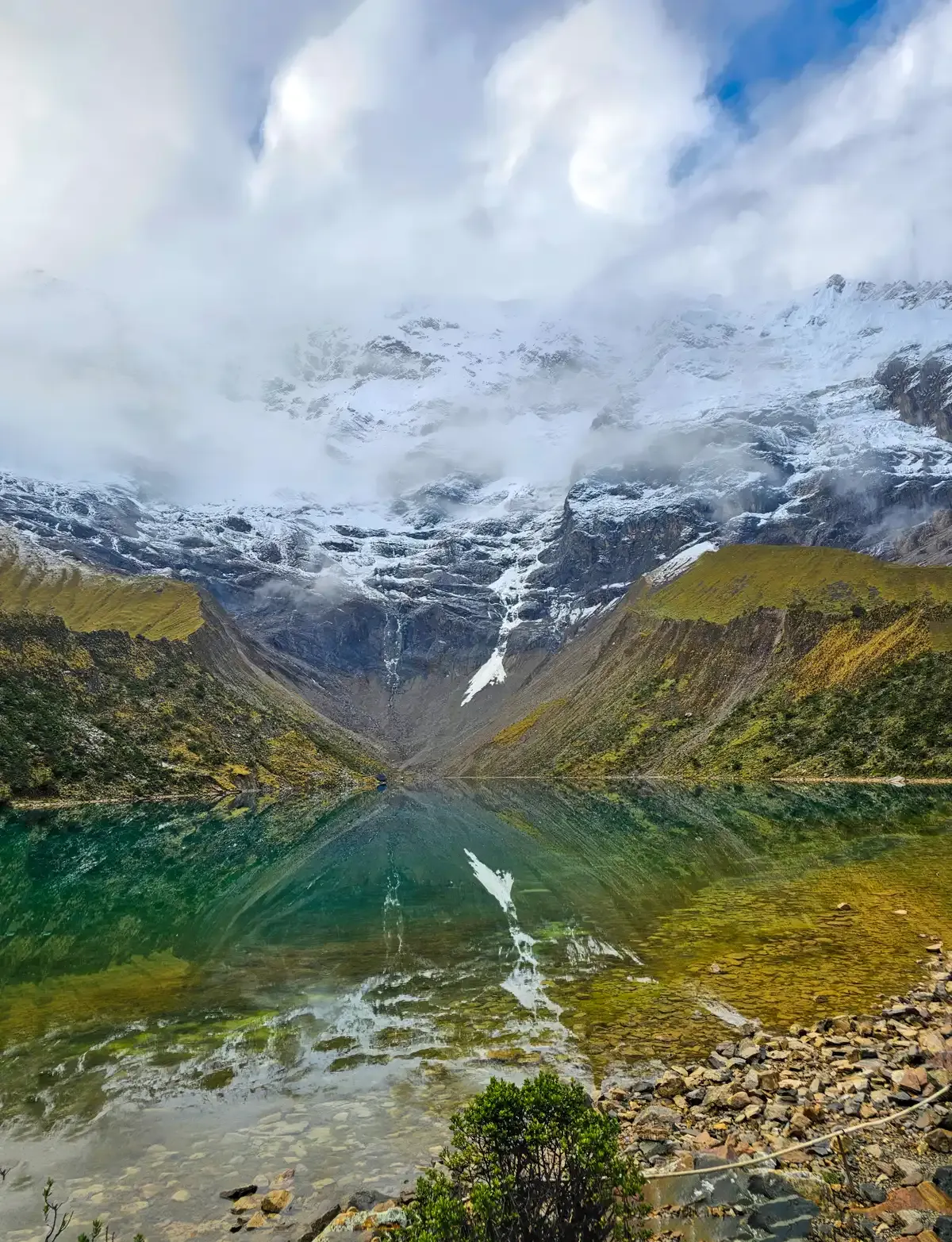
Humantay Lake at 4,200 m below the Humantay glacier, the first-day detour from Soraypampa. Photo: Steve FUNG, CC BY-SA 4.0, via Wikimedia Commons
Altitudes on the Route
The table gathers the altitudes named in the sources. Where sources disagree, the range is shown rather than one figure, since the pass in particular is reported differently by different guides.
Place
Altitude
Cusco
about 3,400 m
Soraypampa
3,880 to 3,920 m
Humantay Lake
4,200 m
Salkantay Pass
4,580 to 4,660 m
Hidroeléctrica
1,890 m
Machu Picchu
2,430 m
Salkantay summit
6,271 m (alternative figure 6,264 m)
What the Health Advice Says
The NHS says altitude sickness usually occurs above 2,500 m, with symptoms starting 6 to 10 hours after arrival and most cases passing in 1 to 3 days. Above 3,000 m it advises not gaining more than 300 m of sleeping height per night, and if symptoms worsen, descending around 300 to 1,000 m. Confusion, balance problems, breathlessness at rest or a cough with blood need immediate descent and medical help.
Wikivoyage recommends at least 2 to 3 days in Cusco or at a similar altitude before starting. Cusco itself sits at about 3,400 m, so the city is a natural acclimatization stop.
How Hard Is the Trek
The pass day is the test: a climb to around 4,600 m followed by a long descent, and operators rate the trek as challenging with a high level of fitness required. The longest Wikivoyage stages are 20 km a day. Mules carry the bulk of the gear on most departures, 6 or 7 kilos of personal luggage per trekker where the listing states a figure.
Get travel insurance that covers high-altitude trekking, since the pass exceeds the 4,000 m line many insurers use for exclusions, and at least one operator requires cover up to 5,000 m.
The trek runs year-round, but the trail conditions and the crowds change sharply between the dry and rainy seasons. The figures below come from Wikivoyage, Wikipedia and the ticket guides. Month by month figures are on the best time for the Salkantay trek.
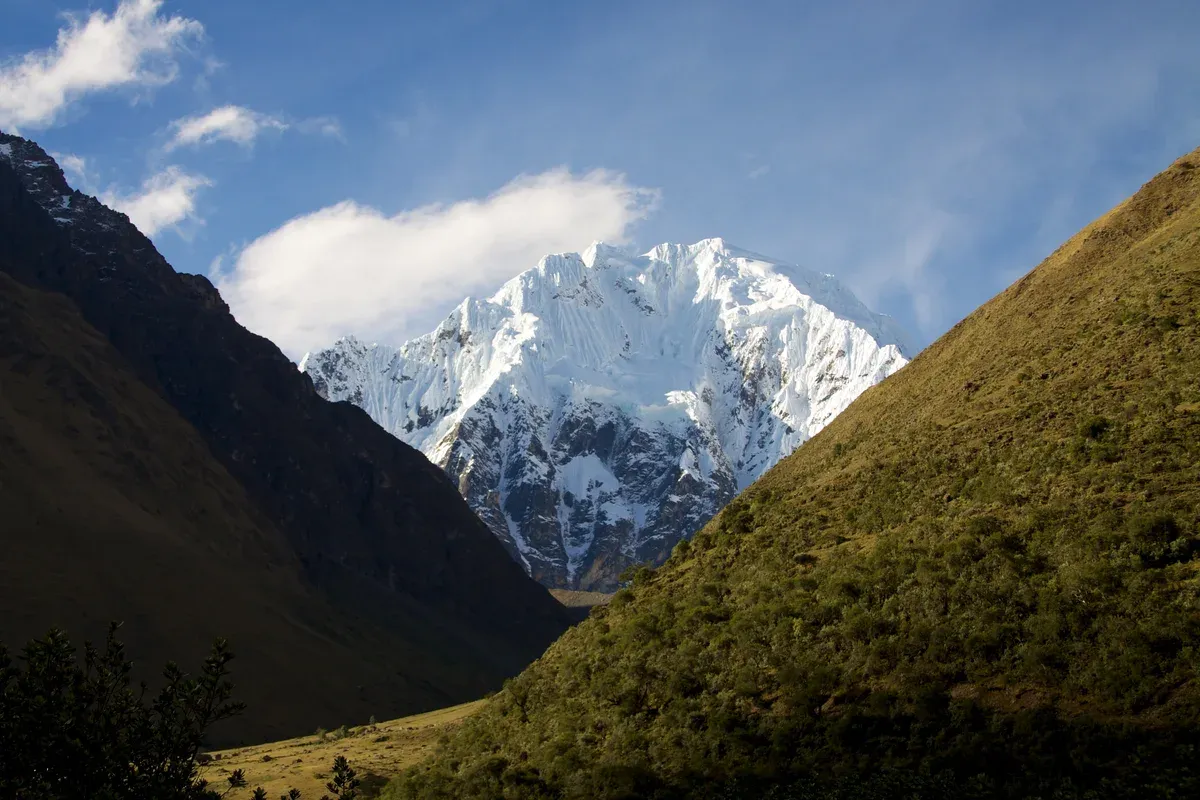
Nevado Salkantay above the valley on the approach to the Soraypampa campsite. Photo: McKay Savage from London, UK, CC BY 2.0, via Wikimedia Commons
The Seasons at a Glance
The table lines up the trail seasons with the Machu Picchu visitor calendar, so you can see when the walking is best and when the site is busiest.
Months
Season
On the trail
May to September
Dry season
Best conditions on the trail
November to March
Rainy season
Mud and landslides on the trail
October to March
Cusco wet season
Rain in Cusco and on the approach
19 June to 2 November plus holidays
Machu Picchu high season
5,600 daily tickets, 4,500 the rest of the year
Booking Ahead
Machu Picchu tickets sell out, and operators say it plainly: one listing asks you to book at least five months ahead to secure the entry circuit it wants, and another asks for three months ahead. The Inca Trail closes every February for cleaning. Salkantay has no permit system, so the treks in this catalog sell departures without one.
Cold Nights, Wet Trails
In the dry season the days are clear but the high camps are cold, with operator listings citing nights to minus 5 C and sources reporting down to minus 10 C around the pass. In the rainy season the trail turns to mud and landslides are a known risk. Camp type matters more than people expect: domes and cabins with real beds and hot showers, like the Salkantay Sky Lodge Domes Trek, take the edge off cold nights, and tent nights are where a warm sleeping bag earns its rental.
The Salkantay Trek Without a Tour
The Salkantay Trek is one of the few routes to Machu Picchu you can walk without a permit or a guide. It is doable, but you carry everything yourself: navigation, camps, food and tickets. The full plan is on the Salkantay trek without a guide, and every extra is priced on Salkantay trek cost.
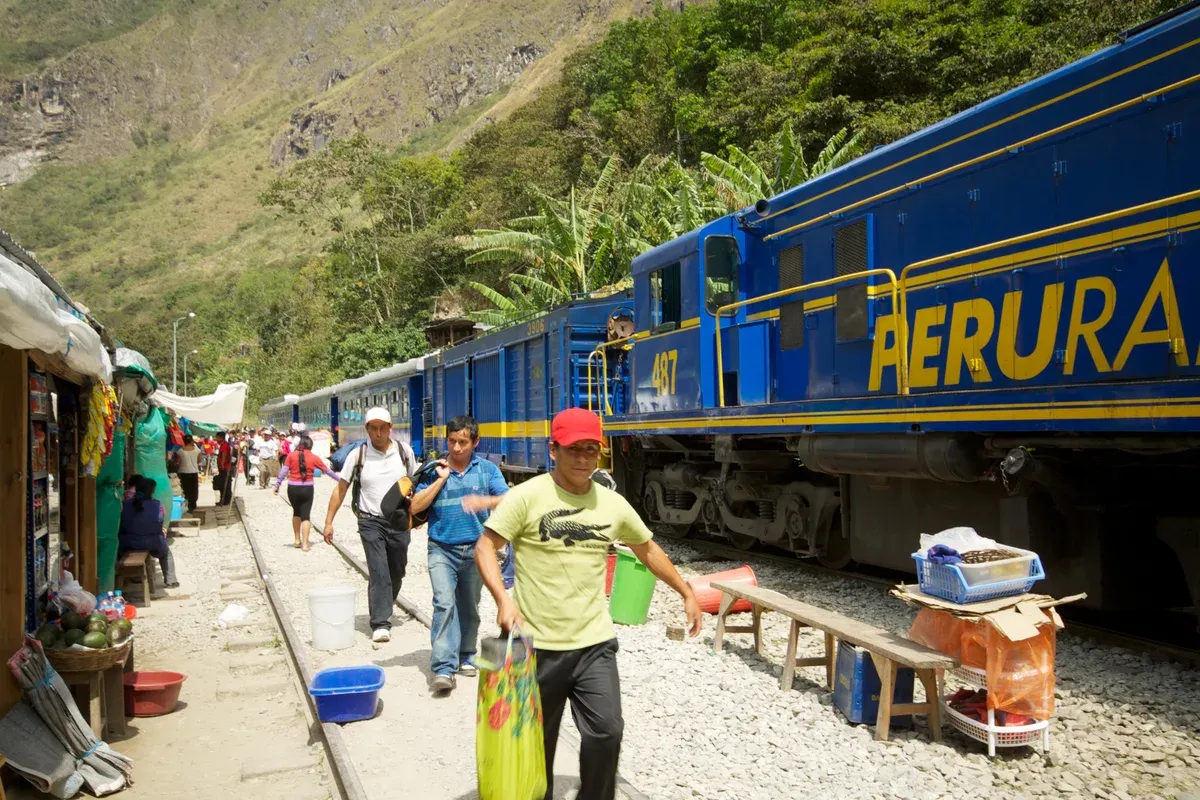
The Hidroeléctrica station at the end of the line from Aguas Calientes. Photo: McKay Savage from London, UK, CC BY 2.0, via Wikimedia Commons
What the Independent Trek Costs
The table lists the fixed costs an independent hiker pays, gathered from Wikivoyage, ticket guides and trekker reports. Fares marked as reported differ between sources.
Item
Cost
Note
Shared minibus Cusco to the start
S/15 to 20
Taxi S/60 to 80
Trek fee
S/20
Paid at the start
Train Hidroeléctrica to Aguas Calientes
US$31 or about 60 soles (US$19)
Two figures reported, walk is free at 2.5 hours
Consettur bus Aguas Calientes to Machu Picchu
US$12 one way, US$24 return
Buses every 10 minutes
Machu Picchu ticket
152 soles
Per the listings, bought in Aguas Calientes
What You Organise Yourself
You carry your own pack, and independent hikers are advised to keep it at 4 to 7 kg. Campsites along the route cost about 7 to 10 soles a night. Food is on you for five days.
The Machu Picchu ticket is the real bottleneck: Andina reports tickets are sold exclusively through tuboleto.cultura.pe, and 1,000 in-person tickets a day are sold in Aguas Calientes. Wikivoyage lists the hazards as altitude sickness, sun exposure, cold, landslides, and snakes and tarantulas in the lower sections.
Why Most People Book a Tour
A guided departure puts the ticket, the train or bus back, the meals, the mules, the cook and the camping gear on someone else's list, and many departures also include Humantay entry and hot springs. Prices start at $300 with everything important left out, and reach $1,265 for a private trip with it all in. The comparison table shows which listing includes which, so you can judge whether the tour premium is worth it for your dates.
Before You Leave Cusco
Do
Do spend 2 to 3 days in Cusco first, because Wikivoyage recommends that acclimatization time and Cusco already sits at about 3,400 m.
Do send your passport details early, because listings require them at booking and the Machu Picchu ticket must match your passport exactly.
Do check whether your price includes the Machu Picchu ticket and the way back to Cusco, because the cheapest listings leave both out and they change the real cost most.
Do rent or bring a sleeping bag where it is not included, because high-camp nights drop to minus 10 C and several listings charge it separately.
Do carry soles for the entrance fees, because the trek fee of S/20, Humantay entry and the Cocalmayo hot springs are paid on the trail.
Don't
Don't book a non-refundable trek before your flights are fixed, because several departures here have no refund at all while others allow free cancellation up to 24 hours.
Don't expect the 2-day trek to reach Machu Picchu, because it visits Humantay Lake and the pass and returns to Cusco without the site.
Don't pack more than the mule allowance, because the listings that state one give 6 or 7 kilos of personal luggage per trekker.
Don't go higher if symptoms get worse, because the NHS says descend around 300 to 1,000 m and seek help for confusion, breathlessness at rest or a cough with blood.
Guided Trek or On Your Own
Both ways reach Machu Picchu. The honest difference is what lands on your shoulders.
What we genuinely like
+A guided trek handles the Machu Picchu ticket and the train or bus back, the two items that decide the real cost
+Mules carry 5 to 7 kilos of your luggage on most listings
+Cooks, camping gear, Humantay entry and hot springs often come in the price
The honest downsides
−Listings from $300 to $1,265 are hard to compare because the inclusions differ
−Many departures are non-refundable with all sales final
−The cheapest listing leaves out the ticket, the sleeping bag and the return trip
Who it's NOT for: A guided tour is not for experienced trekkers on a tight budget who want to walk the stages at their own pace and organise the S/20 trek fee, camps and the Machu Picchu ticket through tuboleto.cultura.pe themselves.
Which Trek Fits You
If You want the trek with everything included and the best-reviewed comfort camps.
→ Take the Salkantay Glass Cabins Trek, $695 with the Machu Picchu ticket, the train back and a 4-star hotel night.
If You want the lowest headline price and will pay the extras yourself.
→ Look at the Salkantay Panoramic Domes Trek at $300, which leaves out the ticket, the sleeping bag and the return trip.
If You only have 4 days but still want the pass and Humantay Lake.
The pick is the 5-day Salkantay Glass Cabins Trek at $695, rated 5.0 from 2,900 reviews, with the Machu Picchu ticket, the train back and a 4-star hotel night included, which is $65 less than the most reviewed classic trek at $760.
How much does a Salkantay trek tour cost?
Listings run from $300 to $1,265, but the sticker price is not the trip price. Compare what each listing includes using the comparison table, because the Machu Picchu ticket and the way back to Cusco are the two items that decide the real cost.
Is the Salkantay Trek dangerous?
The main risks are altitude, with the pass reported at 4,580 to 4,660 m, cold nights to minus 10 C, sun exposure and landslides in the rainy season, per the route and altitude sections. The NHS warning signs and descent advice are the ones to know before you go.
No permit is needed, unlike the Inca Trail's 500-per-day cap. You pay a S/20 trek fee at the start, listed in the independent trek costs, and you still need a Machu Picchu entrance ticket for the site itself.
Is there a 3-day Salkantay trek?
No 3-day listing appears in this catalog. The shortest guided option is the 2-day Humantay Lake 2-Day Trek at $335, which covers Humantay Lake and the pass but skips Machu Picchu, and the 4-day treks are the shortest that include the site.
The Salkantay Glass Cabins Trek includes the Machu Picchu ticket, the train back and a 4-star hotel night for $695.
Rated 5.0 from 2,900 reviews. Check the cancellation terms on the listing before you pay.
 Salkantay Trekking Tours