 Salkantay Trekking Tours
Best Time to Do the Salkantay Trek
The best time to do the Salkantay trek is the dry season from May to September, when trails are stable and the glacier views are clear. This guide uses the Cusco climate figures, month by month, to show when the rain falls, when the nights drop near freezing and when the route is busiest. It also covers the Machu Picchu visitor caps, the February Inca Trail closure and how far ahead you should book each month. If you want the route itself, see the Salkantay trek tours, which compare the bookable treks in one table.
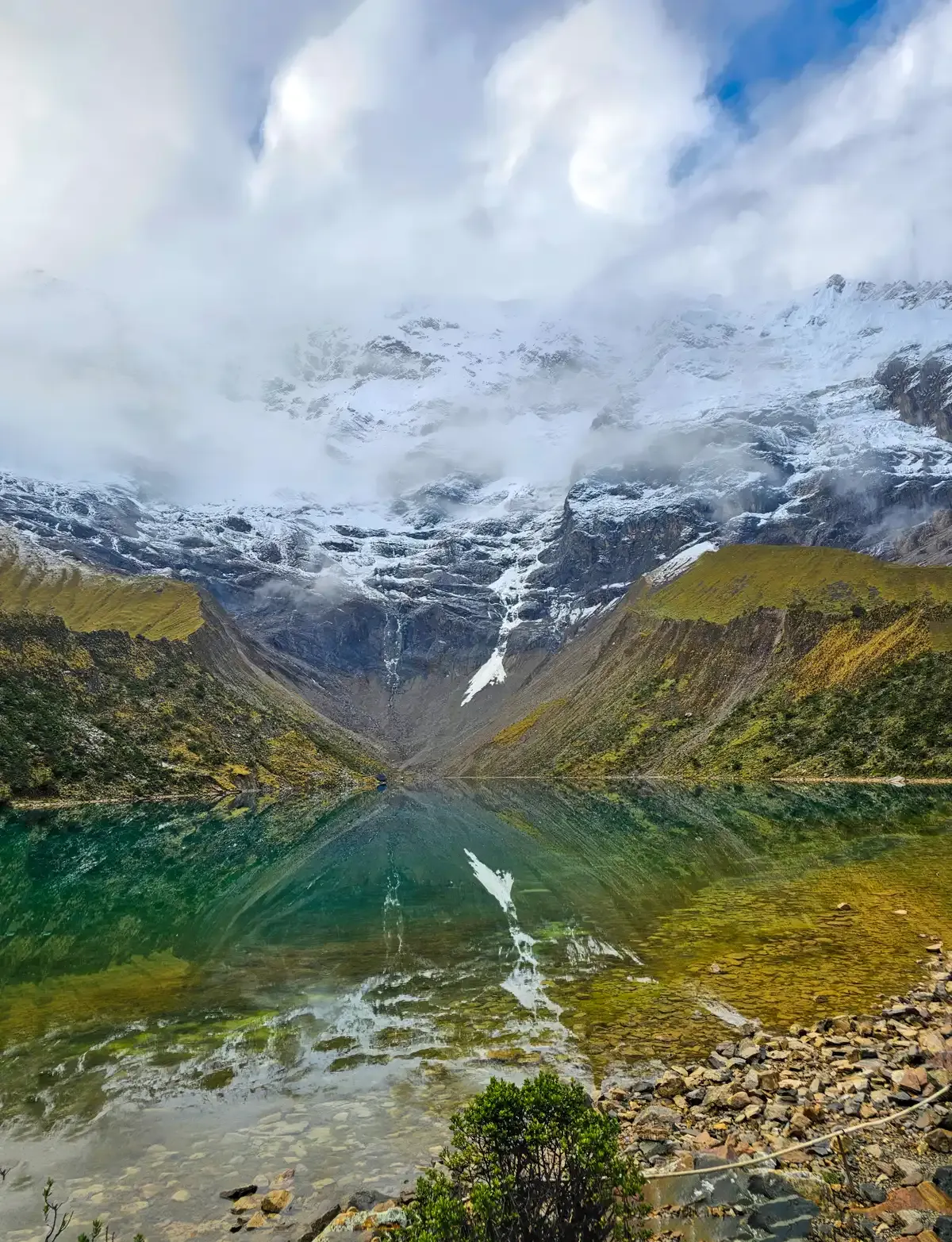
Humantay Lake under the Humantay glacier, the first-day detour from Soraypampa. Photo: Steve FUNG, CC BY-SA 4.0, via Wikimedia Commons
Quick answer Best months at a glance
May to September is the best time to do the Salkantay trek, with Cusco recording as little as 3.3 mm of rain in June against 153.4 mm in January. Days sit around 21 C in Cusco, but operator sources put nights at the high camps near 0 C, and at minus 5 C in winter. The rainy season runs from November to March, with mud, fog and swollen rivers. October and April are shoulder months with moderate rain.
Key takeaways
- See the rain and night figures for every month in the seasons table.
- Book 3 to 5 months ahead for the driest months, per the booking advice.
- Check what each season feels like on the trail in month by month.
- Deciding between routes is covered in Salkantay trek vs Inca Trail.
Cusco Month by Month: Night Lows and Rain
Mean daily lows and monthly rain in Cusco from the Wikipedia climate table. The pass camps are far colder than Cusco, but the pattern is the same: dry, cold nights from May to September, rain from November to March.
The Seasons on the Salkantay Trek
The figures below come from the Cusco climate record. Cusco sits at about 3,400 m, so trail conditions at the higher camps are colder than these numbers suggest.
Rain and Nights by Season
The table groups the year into the dry season, the two shoulder months and the rainy season. Rain is the mean monthly rainfall in Cusco and nights are the mean daily low. On the trail, the high camps run colder than Cusco, with independent sources putting night temperatures at about 0 C in the wet season and minus 5 C in winter.
Aguas Calientes at the finish is warmer and far wetter, receiving about 2,116 mm of rain a year, almost three times Cusco's total.
| Months | Rain | Nights | On the trail |
|---|---|---|---|
| May to September | 3.3 mm to 18.0 mm per month | 1.2 C to 5.0 C in Cusco, about 0 C to minus 5 C at the high camps | Dry trails, clear glacier views, busiest months |
| October | 54.5 mm over 9.3 rainy days | 6.8 C | Rains return but days are warm at 21.9 C |
| November to March | 77.3 mm to 153.4 mm per month | 7.6 C to 8.0 C | Mud, fog, swollen rivers and landslide risk |
| April | 38.4 mm over 7.3 rainy days | 6.2 C | Rains easing |
The Dry Season, May to September
Wikivoyage gives the best conditions as May to September and this is the window most trekkers choose. Rain in Cusco falls to just 3.3 mm in June, 5.9 mm in July and 6.6 mm in August, against 727.7 mm for the whole year. Trails are stable and the glacier views from the pass are clear.
The trade-off is cold: the mean low in Cusco drops to 1.2 C in July and 1.9 C in June, and sources put high-camp nights near 0 C, down to minus 5 C in winter. One operator's weather page estimates 14 C to 2 C at Soraypampa on day 1. Bring a sleeping bag rated to about minus 10 C, and see the Salkantay trek packing list for what else to carry.
The Rainy Season, November to March
Wikivoyage lists the rainy season as November to March, with mud and landslides, and one operator puts the heaviest rain from January to March. Cusco records 153.4 mm over 19.6 rainy days in January, 132.1 mm in February and 125.2 mm in December. Landslides have closed sections before, damaging the Collpapampa to La Playa trail with a road alternative in place.
Days are still mild, with Cusco highs near 20.5 C, but fog can hide the pass views and rivers swell. One operator does not run its 3-day challenge in February because of the rain and route maintenance. The Salkantay has no permit system, unlike the Inca Trail, which shuts every February for cleaning.
If you must travel in the wet months, a shorter option such as the Humantay Lake and Salkantay Pass 2-day trek at $335 reduces your exposure to the worst weather.
Month by Month
Each block uses the Cusco climate figures. Remember the trail runs colder at altitude and much wetter near Aguas Calientes.
April and May
April is the tail of the rains, with 38.4 mm over 7.3 rainy days in Cusco, a high of 21.0 C and a low of 6.2 C. May is when the dry season begins: rain collapses to 7.1 mm over just 2.2 rainy days and the high reaches 21.2 C. The mean low falls to 3.6 C, so expect cold nights at the Soraypampa camps, which sit at about 3,900 m. Machu Picchu's high season begins on 19 June, so book early.
June to August
This is the core of the dry season and the coldest period for nights. Cusco's mean lows are 1.9 C in June, 1.2 C in July and 2.8 C in August, with rain of just 3.3 mm, 5.9 mm and 6.6 mm. Days are pleasant, reaching 20.6 C to 21.5 C. June brings Inti Raymi on 24 June at Qorikancha, the Plaza de Armas and Sacsayhuaman in Cusco, described as the second-largest festival in South America with over 800 artists.
Machu Picchu is also in its high season for ticket quotas. July and August suit hikers who want maximum stability and accept frozen nights at the high camps.
September and October
September keeps the dry pattern with 18.0 mm of rain over 3.9 rainy days, a high of 21.7 C and a low of 5.0 C. One operator describes August and September as warm and dry with a quieter route than the earlier high-season months, and recommends booking the classic 4-day trek at least 3 months ahead for September. October is the Salkantay trek in its shoulder shape: rain climbs to 54.5 mm over 9.3 rainy days, but the high of 21.9 C is the warmest of the year until November. Pack rain gear.
November to March
Rain builds fast. Cusco records 77.3 mm in November, 153.4 mm in January, 132.1 mm in February and 125.2 mm in December, with highs steady around 20.3 C to 22.3 C. The Salkantay trek in February is possible because the route has no permit system, but you should expect mud, fog, swollen rivers and possible landslide detours. Nights are the mildest of the year at 7.6 C to 8.0 C in Cusco, with wet-season camp lows around 0 C. The Inca Trail closes for cleaning every February.
The Machu Picchu daily cap is 4,500 outside the high-season dates. See Salkantay trekking tours for the bookable departures.
When to Book
The Salkantay needs no permit, but Machu Picchu tickets are capped each day and the dry months are the busiest.
Machu Picchu High Season and the 5,600 Cap
Machu Picchu's daily visitor limit is 4,500 tickets for most of the year, rising to 5,600 in high season. That high season runs from 19 June to 2 November, plus 1 January, 2 to 5 April, 30 to 31 December and holidays. The site opens 6:00 to 17:00 daily and tickets are non-transferable and non-refundable, so a missed date costs money.
Tourism-site summaries list S/152 for foreign adults on the standard circuits and S/200 for tickets that include a mountain hike. Huayna Picchu has only 350 tickets a day, in two entry slots of 8:00 to 9:00 and 10:00 to 11:00. If your trek dates fall inside the high-season window, reserve Machu Picchu entry early.
How Far Ahead to Book
The Salkantay route itself needs no permit, so unlike the Inca Trail's 500-a-day quota there is no permit to book. The practical limits are Machu Picchu tickets and tour availability. One operator advises booking the classic 4-day trek at least 3 months ahead for September.
For peak June and July, which one operator rates as its busiest months, the Classic 5-day listing ties Circuit 2 to bookings made 5 months ahead. For the wet season the sources give no lead time, and one operator does not run its 3-day challenge in February.
Flexible Dates and Free Cancellation
If you are not sure which month you will travel, pick a listing with free cancellation. The Salkantay Sky Lodge Domes 4-day trek costs $680 and allows free cancellation up to 24 hours, though the Machu Picchu ticket and the return to Cusco are paid on top. The Salkantay 5-Day Trek with Gear at $650 also has free cancellation up to 24 hours and asks you to book at least 3 months in advance.
Non-refundable listings can be cheaper, but they lock your dates. The full side-by-side of every trek is on the homepage comparison.
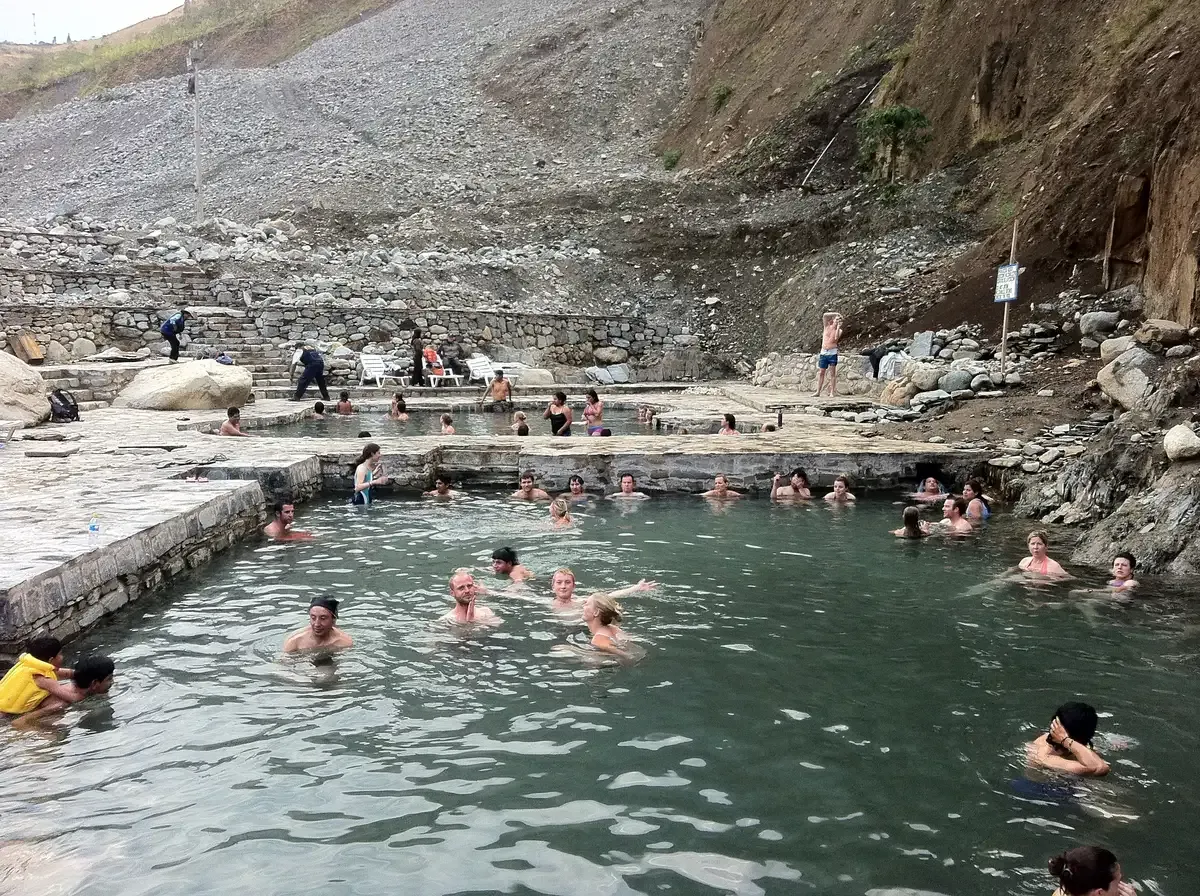
The Cocalmayo hot springs near Santa Teresa. Photo: TMbux, CC BY-SA 3.0, via Wikimedia Commons
Frequently Asked Questions
What is the best time of year to do the Salkantay trek?
May to September, when Cusco's rain falls to between 3.3 mm and 18.0 mm a month and trails are stable. Nights at the high camps can reach about 0 C, so pack for the cold. For the full season breakdown see the seasons on the Salkantay trek.
Does the Salkantay trek close?
The Salkantay has no permit system, and none of the sources lists a closure. The Inca Trail, by contrast, closes every February for cleaning. Heavy rain in the wet months can still force landslide detours, so check the Salkantay trek map for the route and its alternatives.
Is the Salkantay trek possible in February?
Yes. February is one of the wettest months, with 132.1 mm of rain in Cusco, so expect mud, fog and swollen rivers. One operator does not run its 3-day challenge that month. If you go, read how hard the Salkantay trek is first.
Is October a good month for the Salkantay trek?
October is a workable shoulder month. Rain rises to 54.5 mm over 9.3 rainy days in Cusco, but the high of 21.9 C is among the warmest of the year. Bring rain gear, and see the Salkantay trek cost page for what the listings cost.
How far ahead should I book a Salkantay trek for the dry season?
For September one operator advises at least 3 months ahead, and 5 months is the lead time quoted on listings for the widest Machu Picchu circuit choice in the peak months. Machu Picchu tickets are non-refundable, so match your booking to your dates. Browse the departures on Salkantay trek tours.